Life
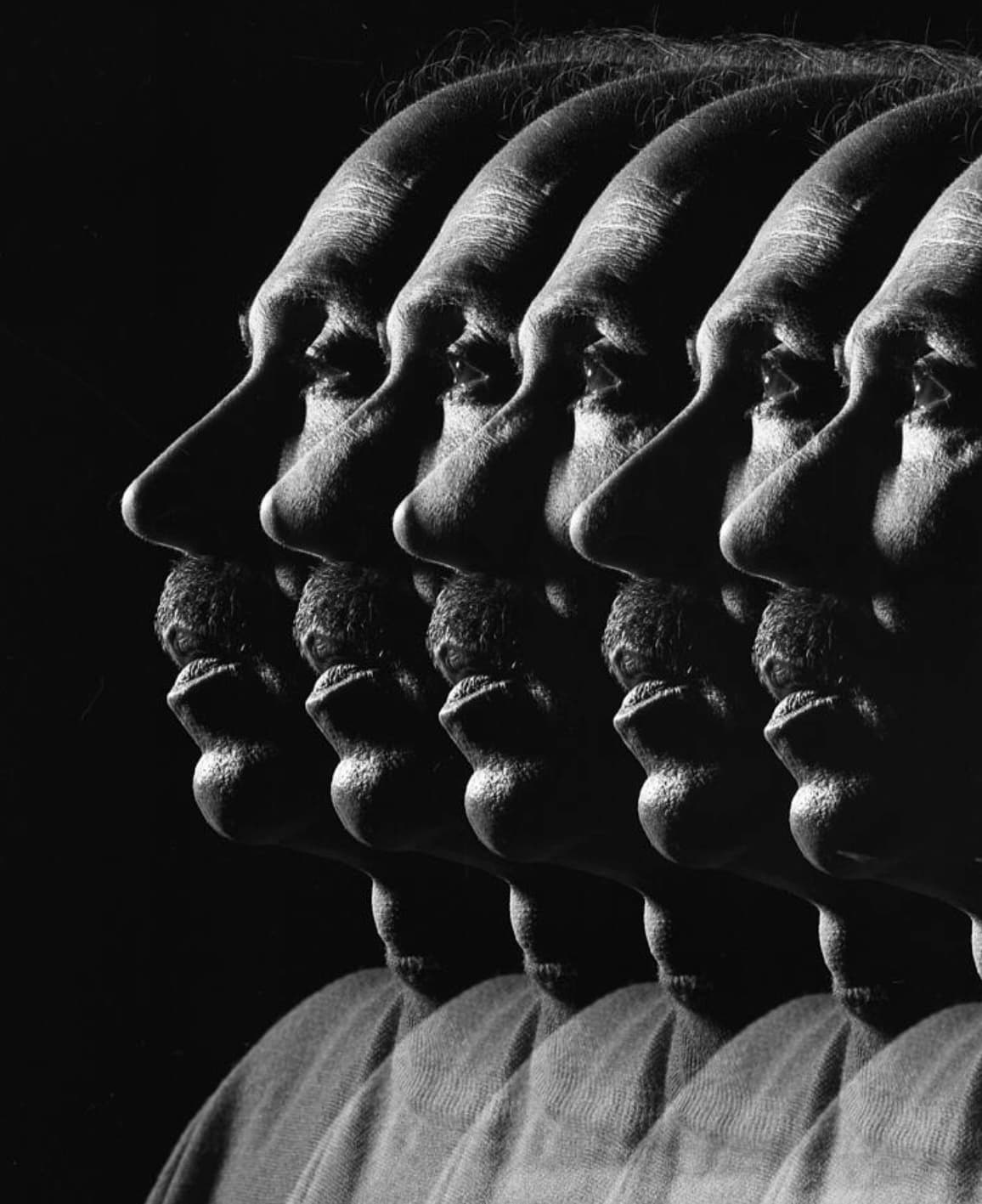
Basil Alkazzi (1936–2025) was a prolific painter whose career spanned over six decades. Best known for his luminous gouache paintings, his works explore cycles of life, landscape, and spiritual transformation, moving between observed terrain and imagined, metaphysical realms.
Born in Pune, India, to a Saudi-Kuwaiti family, he was raised between India and Lebanon and educated in Beirut before moving to London to study at the Central School of Art in the 1950s. Early travels, particularly in Greece, shaped his sensitivity to light, atmosphere, and terrain, forming the visual language that would define his practice.
Alkazzi established his career in London in the early 1970s, going on to exhibit widely internationally, with works now held in major collections including the Metropolitan Museum of Art, New York; the Royal College of Art, London; and the National Council for Culture, Arts and Letters, Kuwait.
From the mid-1980s, Alkazzi lived between London and New York, later settling in Monaco, where he remained for the rest of his life. Alongside his artistic practice, Basil Alkazzi was a dedicated philanthropist, establishing scholarships and supporting artists and educational institutions, with a lasting commitment to widening access to the arts.
Chronology
1930s-1950s: early life and education
1936
Born in Pune, India, to Hamed and Mariam Alkazzi.* His father, Hamed Alkazzi (Al-Qadi), was one of the leading merchants of the city of Unaizah.
1940s
Attends boarding school in Beirut, where he develops an early interest in art.
c.1953–1955
Moves to London to study at the Central School of Art.
Late 1950s
Periods of travel in early adulthood, including over a year in Chania, Greece, where he teaches English. This contributes to the early development of his visual language, particularly in relation to landscape and light.
1960s: emergence of themes
1963
Begins Birth, Death & Birth, a pivotal early series establishing themes of transformation, continuity, and the human condition.
Mid-1960s
Develops a visual language influenced by prehistoric cave painting and symbolic forms.
1970s: expansion of practice
1970s
Maintains connections to Unaizah, Saudi Arabia with intermittent visits during the decade.
Early 1970s
Begins working in photomontage and collage, using layered imagery to depict portraiture, popular culture, and surrealist compositions.
1973
Following his first exhibition at Chenil Galleries, London (1973), Alkazzi begins exhibiting regularly in group shows, establishing his early professional presence.
1970–1985
Develops the Virgin Mary series, exploring spiritual, architectural, and metaphysical imagery. This introduces theatrical spatial structures that become a recurring visual framework in Alkazzi’s work.
1976
First solo exhibition Recent Works 1974–1976 at Drian Galleries, marking the beginning of a long-term association with curator Halima Nalecz.
Participates in the World of Islam festival at the Percival David Foundation, London.
1977
Awarded the Grand Prix International d’Art Contemporain, Monte Carlo.
Travels through North Africa, Turkey, and Greece, which further informs his engagement with landscape and architectural form.
1978
Produces the Birth series, structured around continuity and cyclical transformation.
Late 1970s
Shifts toward lighter imagery, with a growing focus on landscape, nature, and metaphysical space.
Mid–late 1970s
Increasingly adopts gouache as a primary medium, which remains central to his practice.
1980s: experimentation and international recognition
1980
Exhibits in Arab Culture at Mentmore Towers, Buckinghamshire, alongside continued presentations in London, maintaining sustained visibility within UK institutional and gallery contexts.
Early 1980s
Produces key series including Greek Figures, Xania, and Lovers, extending his exploration of architectural space, landscape, and symbolic figuration.
1982
Presents first major retrospective, The Art of Basil Alkazzi (1962-1982), at Drian Galleries.
Accompanied by a publication by Max Wykes-Joyce, My Heart Has Opened Unto Every Form: The Art of Basil Alkazzi, this marks a significant consolidation of critical attention around his practice.
1983
Begins a long-standing relationship with the National Museum in Gdańsk, initiating an institutional connection that continues throughout his career.
1984
Following the death of his mother, establishes a foundation supporting emerging artists, marking a formal expansion of his philanthropic activity alongside his practice.
1985
After an injury temporarily prevents him from painting, Alkazzi turns to photomontage during travels in the United States.
This initiates a major body of work, Photomontages (1985–1999), spanning architectural composition, portraiture, and constructed imagery.
1986
Establishes major awards and scholarships at the Royal College of Art, including: the Basil H Alkazzi Foundation Award (endowed in perpetuity), the Travelling Scholarship, and the Fatima and Faiza H Alkazzi Award (named in honour of his sisters).
1987
Begins Beyond the Isthmus (1987-1989), marking a return to painting and a renewed engagement with spiritual and metaphysical themes.
Named Honorary Fellow of the Royal College of Art, London, recognising his artistic achievements and support for fellow artists.
First touring solo exhibition across the US, Basil Alkazzi: Recent Works 1984-1986, initiates a sustained period of activity across the United States.
Establishes two US-based independent awards, the Basil H. Alkazzi Award and the Sheldon Bergh Award, supporting artists and reinforcing his role as both practitioner and patron.
1988
Produces House Forms (1988–1989), extending his exploration of architectural and theatrical structures.
1989
Presents major solo and touring exhibitions across the United States, including in New York and regional museums, marking a significant expansion of his presence in American collections.
Begins New Seasons (1988-1992), introducing the triangle motif that becomes a defining feature of Alkazzi’s canvases.
1990s: abstraction, transition and return to landscape
1990
Begins Transmutations (1990-1991) and Voyage into Remembrance (1990-1992), marking a decisive shift toward abstraction and metaphysical structure.
1991
Begins Whispering Silence (1991-1996), a major multi-panel series exploring colour, structure, and spatial composition through unified works formed from separate sheets.
1992
Creates The Last Supper Maquette (1992), continuing his engagement with spiritual themes.
Returns to Collages (1992–1995), producing layered works combining landscape, antiquity, and symbolic imagery.
1993
Publication of Basil Alkazzi – New Seasons… by Max Wykes-Joyce.
1994
Relocates to New York after being granted U.S. residency as an artist of exceptional ability in the arts, consolidating his international presence.
1996
Creates Blossoming Moon in a Skyscape, a monumental multi-part work exploring cyclical and lunar transformation.
Works from Transmutations (1990-1991) and Whispering Silence (1991-1996) enter the collection of The Metropolitan Museum of Art.
1998
Produces Madonna & Child (1998), revisiting religious imagery through abstraction.
Begins Ascension (1998–1999), introducing a renewed focus on light and vertical movement.
1999
Returns to Europe and settles in Monaco, marking a shift toward landscape and direct engagement with the natural world.
Begins The Rites of Spring (1999–2000), introducing a more overtly natural and regenerative imagery.
2000s: renewal, landscape and publication
2000
Donald Kuspit publishes The Rites of Spring…, examining Alkazzi’s evolving practice and transition toward nature and landscape-based imagery.
2002
Continues exploring landscape and the natural world through heightened, visionary imagery in The Rites of Midsummer (2002-2003) and Twilight Spring (2002-2003), extending themes of renewal and the intersection between earthly and spiritual realms.
2005
The Royal College of Art publishes The Basil H. Alkazzi Foundation, marking his twenty-year association with the institution.
Named Senior Fellow of the Royal College of Art in recognition of his artistic achievements and philanthropic support.
2007
Dennis Wepman publishes Resonant Echoes: The Art of Basil Alkazzi.
Presents a solo exhibition in Japan, marking continued international engagement.
2008
Alkazzi publishes Journey to a Land Closer to Heaven, a photographic record of travels through China and Tibet (2006–2007), accompanied by his writings.
2010s: reflection, synthesis and institutional recognition
2010
Creates the short film Murmurs…
Begins Ezra & Transmigration of the Soul (2010–2016), revisiting earlier themes through a refined gouache technique.
2011
Produces the short film Prayers & Incantations.
2013
Begins Transmigration (2013-2017), depicting floating stems and petals within luminous, metaphysical landscapes.
A major solo exhibition, An Odyssey of Dreams: A Decade of Paintings 2003–2012, curated by Judith K. Brodsky, is presented across U.S. institutions.
2014
Publication of Basil Alkazzi – An Odyssey of Dreams, with contributions from Donald Kuspit, Judith K. Brodsky, Michael Royce and Harry L. Naar.
Co-curates Vivat! Vivat! My England! with Jenny Hedgecoe at the Royal College of Art, showcasing the photography of John Hedgecoe.
Receives the ‘Provost’s Circle’ Medallion from the Royal College of Art in recognition of over three decades of support.
2015
Establishes the Basil Alkazzi and Halima Nalecz Fund with the National Museum in Gdańsk.
2017
Begins Summer Landscapes (2017–2020), returning to more direct, naturalistic depictions of the European landscape.
2018
Establishes his artist’s estate, formalising the long-term stewardship of his work and dedicating proceeds from the sale of works to support individuals with autism.
2019
Presents a solo exhibition at the Mark Rothko Art Centre, An On-Going Odyssey: Recent Paintings, continuing his relationship with European institutions.
2020s: legacy and continuity
2020
Produces Seascapes (2020–2022), reflecting a late-career clarity and sustained engagement with light, horizon, and atmosphere.
2021
Honoured by the New York Foundation for the Arts for his artistic contributions and longstanding support of fellow artists.
An exhibition at the National Museum in Gdańsk presents works acquired through the Basil Alkazzi and Halima Nalecz Fund.
In London, POSK Gallery includes his work in Halima Nalecz & Her Artists.
2025
A solo exhibition at the Mark Rothko Art Centre presents works from its collection.
Basil Alkazzi passes away in Monaco on 6 June, aged 89.
Posthumous recognition
2025
As arranged during his lifetime, the National Museum in Gdańsk presents Basil Alkazzi: Artist and Philanthropist - a comprehensive exhibition of works from its collection, accompanied by the publication Basil Alkazzi (1938–2025): Works from 1986 to 2024.
2026
The Basil Alkazzi Artistic Estate continues to preserve his work and advance his stated wish that proceeds from sales support individuals with autism and disabilities.
Basil Alkazzi’s work continues to unfold across exhibitions and collections, while his philanthropic legacy lives on through the continued support of artists, institutions, and individuals with autism and disabilities.
Chronology note
*There is some inconsistency in the recorded birth date and place of Basil Alkazzi. The artist consistently stated that he was born in 1938 aboard a ship travelling from Kuwait to Britain, positioning himself, quite literally, as a figure born in transit. Official records, however, indicate Pune, 1936, which is the date adopted by the Estate. This discrepancy accounts for variations across institutional records and publications. The ambiguity contributes to the quiet elusiveness surrounding the artist's early life, and to a sense of origin as journey that is subtly echoed throughout his work.